News

Who Can Use a Myoelectric Hand? Patient Suitability and the Vulcan Solution

A primary consideration in upper-limb rehabilitation is determining a patient’s suitability for a myoelectric prosthesis. Traditionally, successful myoelectric control requires a residual limb with specific characteristics, particularly strong and isolated electromyographic (EMG) signals. The Vulcan Myoband provides an alternative approach to myoelectric control. By utilizing a flexible, wireless Vulcan Myoband instead of standard rigid socket electrodes, the system is designed to accommodate a broader range of anatomical conditions and signal presentations. The Vulcan system is applicable for multiple upper-limb amputation levels. It is currently indicated for patients undergoing rehabilitation for: Clinical Note: The Vulcan Myoband and prosthetic hand system are not currently indicated for partial hand or individual finger amputations. Residual Limb and EMG Signal Considerations  In patients with complex residual limb conditions, identifying stable signal locations can be difficult and may require repeated calibration. Myoband addresses this challenge through high-sensitivity EMG sensors distributed around the forearm, as well as a smart algorithm developed by Vulcan, allowing the system to capture muscle activity from several channels simultaneously and reliably. This approach can improve signal detection reliability in patients with less predictable signal patterns, allowing it to adapt to various anatomical presentations where traditional single-site electrodes often fail. 1. Scar Tissue and Skin Grafts Scar tissue typically exhibits high electrical resistance, which can attenuate EMG signals and impede detection by standard single-point sensors. The Vulcan Control Solution: If localized scar tissue causes signal attenuation at one site, the algorithm relies on data acquired from adjacent sensors to capture the overall muscle activation pattern. 2. Bone Overgrowth and Irregular Contours Rigid electrodes require flat, continuous contact with the skin. Irregular stump shapes or bony protrusions can cause pressure points, discomfort, and inconsistent sensor contact (motion artifacts). The Vulcan Control Solution: Vulcan Myoband uses a flexible, modular elastic structure. This design allows the sensors to conform to the limb’s natural contours, maintaining contact without applying localized pressure on prominent bones. 3. Bilateral Amputations Clinical Case 3 – Bilateral Amputations [ Watch the video here] Extreme difficulty for the patient to don/doff devices and perform daily calibrations independently. The Vulcan Solution: The band design allows patients to slide the device on using their other stump. Software profiles are saved per limb, making synchronized bilateral control intuitive. 4. Osseointegration  Requires a system that doesn’t interfere with the percutaneous implant site while maintaining high-fidelity control. The Vulcan Solution: Since the bone is fixed, muscle movement is more predictable. Myoband captures these stable muscle contractions non-invasively, providing a high-speed interface that matches the direct-to-bone stability. For clinicians and orthotists, utilizing Vulcan Myoband approach simplifies the socket fabrication process by removing embedded wiring. Functionally, it provides a viable control option for patients whose signal patterns or anatomical features previously excluded them from using standard myoelectric systems. For more information regarding system specifications, user manuals, or to view additional case studies demonstrating the Vulcan Myoband in various clinical scenarios, please visit our resource center. Click here

Who Can Use a Myoelectric Hand? Patient Suitability and the Vulcan Solution Read More »

What is Vulcan Myoband? How the Myoband Controls the Vulcan Myoelectric Hand

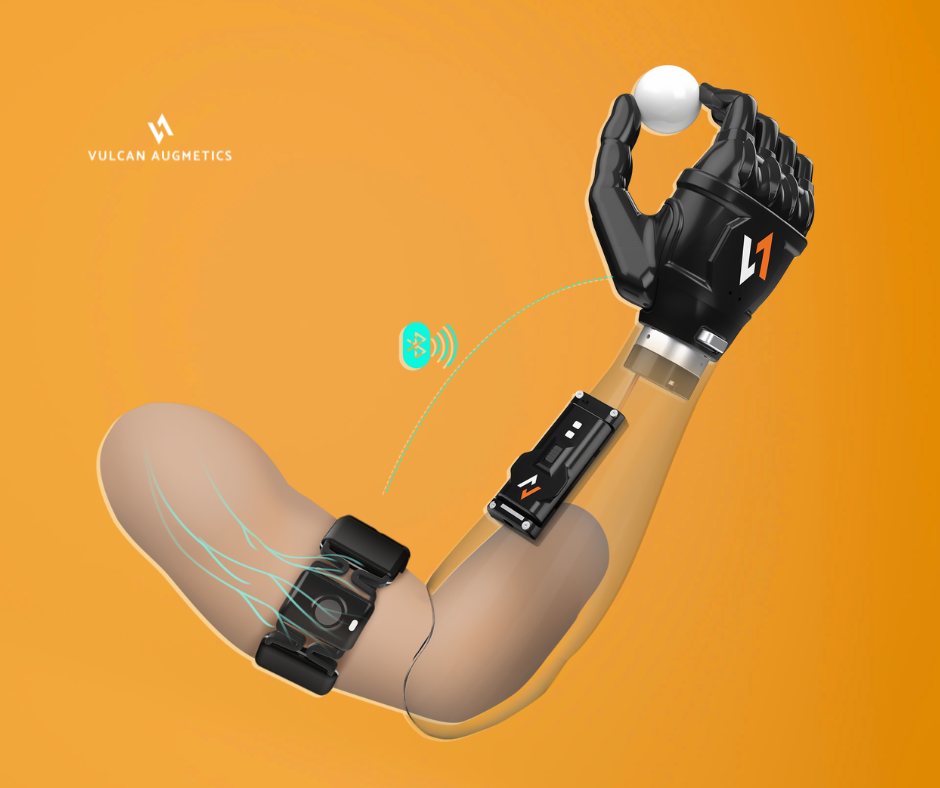
The Vulcan Myoband is a wearable biosignal sensor designed to detect electromyographic (EMG) signals generated when muscles contract. These signals are then used to control a myoelectric or bionic prosthetic hand through Bluetooth Low Energy (BLE). In simple terms, the Myoband acts as the control interface between the patient’s muscles and the prosthetic hand, translating muscle activity into movement. Unlike traditional prosthetic systems that place electrodes inside the socket, the Myoband is worn as a sensor band around the upper arm, typically over the biceps. This design allows the system to capture muscle signals without relying on precise electrode placement within the prosthetic socket. How Does It Work for Patients? 1. Detecting Muscle Signals When a patient attempts to move their missing hand, the remaining muscles in the arm still generate EMG signals. The Myoband contains EMG sensors + IMU sensor positioned around the arm to detect muscle activity from different areas. This multi-point sensing approach helps the system capture weak or complex signals that may be difficult to detect with conventional electrode setups. Watch Video: See How the Vulcan Hand Calibrates in Under 1 Minute! 2. Processing the Biosignals The Vulcan system uses a threshold-based signal detection method. During calibration which typically takes less than one minute, the system analyzes the patient’s EMG signals and automatically determines two key levels: the muscle contraction threshold and the muscle relaxation threshold.  The Myoband’s built-in system automatically measures and analyzes patient EMG signals, calculating and establishing activation thresholds that adapt to each individual’s muscle strength, even in patients with weak or variable EMG signals. 3. Translating Signals Into Movement After calibration, the Vulcan prosthetic hand responds directly to the patient’s muscle activity through BLE communication. In the Vulcan system, the Myoband functions as the signal acquisition and processing unit, while the prosthetic hand acts as the execution device. After muscle activity is detected and translated into control commands, the Myoband sends these commands wirelessly to the prosthetic hand in real time. For example: Depending on the configuration, the control logic can also be reversed. This wireless control solution removes the need for complex internal wiring inside the prosthetic socket. As a result, clinicians have greater flexibility during socket fabrication, while patients benefit from a lighter system, easier maintenance, and more stable signal transmission during daily movement. Contact our clinical team today to see if the Vulcan system is right for you. Click Here How to Wear the Myoband Proper Placement Place the Myoband around the upper arm or forearm, positioning the sensors over the muscles used for control. Adjusting the Strap Wrap the adjustable strap around the arm and secure it comfortably. The band should fit snugly but not too tight. Skin Preparation For optimal signal detection, make sure the skin is clean and dry before wearing the Myoband. Avoid lotions or oils that may affect signal quality. Electrode Preparation Before use, ensure the electrode surfaces are clean. Wipe them with a dry, lint-free cloth to remove dust or residue that could interfere with signal detection. [Watch the User Video Here]

What is Vulcan Myoband? How the Myoband Controls the Vulcan Myoelectric Hand Read More »

Optimizing Myoelectric Hand Control: How the Vulcan Myoband Overcomes Clinical Fitting Challenges

After an upper-limb amputation, receiving a myoelectric prosthetic hand can take one to six months, even after insurance approval or out-of-pocket agreement. The fitting process alone typically requires three to four clinic visits, depending on the complexity of the limb condition and the fabrication workflow. Yet despite this time and effort, myoelectric fittings still fail in many clinics. So why does fitting still take so long? Several factors commonly slow down the process: The EMG Signal Challenge Myoelectric prosthetic control relies on electromyographic (EMG) signals, which are generated when residual muscles contract. After an upperlimb amputation, the remaining muscles in the forearm or upper arm can still produce these signals when a patient attempts to move the missing limb. However, the characteristics of these signals vary widely from patient to patient. The biology of the residual limb and the original surgical procedure play a major role in determining how usable these signals are for prosthetic control. Several factors influence EMG signal quality, including: In addition, surgical reconstruction can alter the natural structure of the muscle system. Depending on the procedure, residual muscles may be reattached to bone or tendon, which can change how neuromuscular signals are generated and transmitted. As a result, EMG signals in an amputated limb often differ from those in an intact limb. They typically show: Surface EMG sensors must detect these signals through several biological layers, including muscle tissue, connective tissue, subcutaneous fat, and skin, which further attenuate and filter the electrical activity. Because of these physiological factors, sensor placement becomes critical. Clinicians must identify the most active muscle regions and optimize electrode placement based on signal amplitude, soft tissue thickness, and stability within the prosthetic socket. Why Electrode Placement Is So Difficult Most traditional myoelectric systems requiring electrodes to be placed on two opposing muscle groups. For reliable detection, electrodes must be positioned precisely on the muscle belly and aligned with the direction of the muscle fibers. During fitting, prosthetists often ask patients to perform repeated muscle contractions while adjusting electrode locations to find signals that are both strong and distinguishable. In practice, this process can involve extensive repositioning and testing, sometimes referred to clinically as “myosite hunting.” Even when optimal placement is achieved in the clinic, maintaining stable signals in daily life remains challenging. Factors such as electrode displacement, socket pressure changes, sweat, and natural biological changes in the residual limb can all affect signal quality. Socket Limitations In conventional prosthetic systems, electrodes are typically embedded inside the socket, which creates additional constraints. Socket design must balance structural strength, comfort, and space for electronic components. At the same time, electrode locations become fixed once the socket is fabricated. However, residual limb volume can fluctuate throughout the day, and small shifts in socket position during daily movement can alter electrode alignment. When signal quality changes, patients may require re-adjustments or even a new socket, extending the fitting timeline and sometimes leading to frustration or abandonment of the prosthesis. The Result: A Trial-and-Error Process Because EMG signals vary between individuals and depend heavily on precise electrode placement, the fitting process often becomes iterative and time-consuming. Multiple adjustments, test fittings, and recalibrations may be needed before achieving stable control. For patients eager to regain independence, these delays can be discouraging. For clinicians, they represent one of the most persistent challenges in modern myoelectric prosthetic care. How the Vulcan Myoband Addresses Common EMG Signal Detection Challenges Reliable EMG signal detection remains one of the most common challenges in myoelectric prosthetic control. In clinical practice, obtaining stable signals can be difficult, especially for patients with complex residual limb conditions. Supporting Patients With Weak or Complex EMG Signals The challenge: Many patients struggle to produce strong, clearly separated EMG signals due to factors such as: The Vulcan Solution: Instead of requiring strong or highly isolated contractions, the Myoband detects subtle increases in muscle activation above the resting state to establish basic open-close control of the prosthetic hand, based on a threshold recognition technology. As a result, patients may experience: Scar tissue, thick subcutaneous fat, or skin grafts, common in burn or trauma patients, can weaken EMG signals, making it difficult to identify two reliable muscle sites for traditional dual-electrode control on the residual limb. The Myoband overcomes this by being worn around the upper arm and using multiple sensors to capture overall muscle activation across a wider area. Even if one region produces weaker muscle signals due to scarring or reduced sensitivity, the system can still detect activity from surrounding healthy muscle tissue. Reduced Dependence on Precise Electrode Placement The Challenge: Traditional myoelectric systems often require precise electrode placement over specific muscle sites. Small positional changes can significantly affect signal quality. The Vulcan Solution: The Myoband reduces this dependency through multi-channel EMG sensing distributed around the upper arm, capturing signals from several muscle regions simultaneously. This design offers several practical advantages: Stability During Daily Movement The Challenge: During everyday activities, prosthetic sockets may shift slightly on the residual limb, a phenomenon known as pistoning. When electrodes are embedded inside the socket, this movement can disrupt signal detection. The Vulcan Solution: Because the Myoband is worn directly on the arm, the sensors maintain more stable contact with the skin.  The Myoband also integrates an IMU (Inertial Measurement Unit) that detects arm position and orientation. This helps distinguish between intentional muscle activation and postural contractions. For example: The system is also designed to handle environmental factors such as sweat and changes in skin impedance, using adaptive algorithms that maintain stable activation thresholds and reduce unintended hand movements.

Optimizing Myoelectric Hand Control: How the Vulcan Myoband Overcomes Clinical Fitting Challenges Read More »

Using the Vulcan Prosthetic Hand as a Parent

For many amputee parents in the Vulcan user community, the Vulcan Multi – grip Myoelectric prosthetic hand is more than just a modern assistive device. It’s a powerful tool that helps them not only manage daily tasks more easily, but also stay connected – physically and emotionally – with their children. In this article, we’re excited to share the stories of two Vulcan users, Mr. Nam and Ms. Quynh, and how their prosthetic hands help them fully engage in parenthood. Adapting to a New Normal After losing his arm in a workplace accident, Nam faced an overwhelming concern: how would he care for his young son alone while his wife lives nearly 4000 kilometers away in Japan? That question led him to Vulcan. On the day of his fitting, Nam was able to perform the basic functions of his prosthetic hand in just 20 minutes – one of the fastest adaptation cases we’ve seen. He successfully completed all of his initial training exercises, including picking up and pouring water, and even playing with LEGO bricks. By the end of his first week, Nam was already handling essential daily parenting tasks: Creating Everyday Joy For Quynh, one of the most heartwarming moments of her day is being able to hug her children when they get home from school – now, with both arms. She initially worried that her kids might feel embarrassed by her prosthetic hand, but instead, they are so proud of the new look of their mom. On her daughter’s graduation day, Quynh wore her Vulcan hand to the farewell party at school. She opened candy wrappers, cut the cake, and even shook hands with her daughter’s friends – all while surrounded by laughter and excitement. Instead of fear or hesitation, the children were fascinated with the fact that she had a “robot hand.” Live. Love. Laugh – with Vulcan The Vulcan prosthetic hand is more than a medical device. For parents like Nam and Quynh, it’s a bridge back to the small, meaningful moments to their family life – from everyday routines to unforgettable celebrations. Because nothing is more powerful than being able to live, love, and laugh with your children – without limits. We’re Here to Support You We hope the stories of Nam and Quynh brought a little inspiration to your day. If you’d like to learn more about how the Vulcan prosthetic hand can help you thrive as a parent, reach out to us for a personalized consultation.

Using the Vulcan Prosthetic Hand as a Parent Read More »
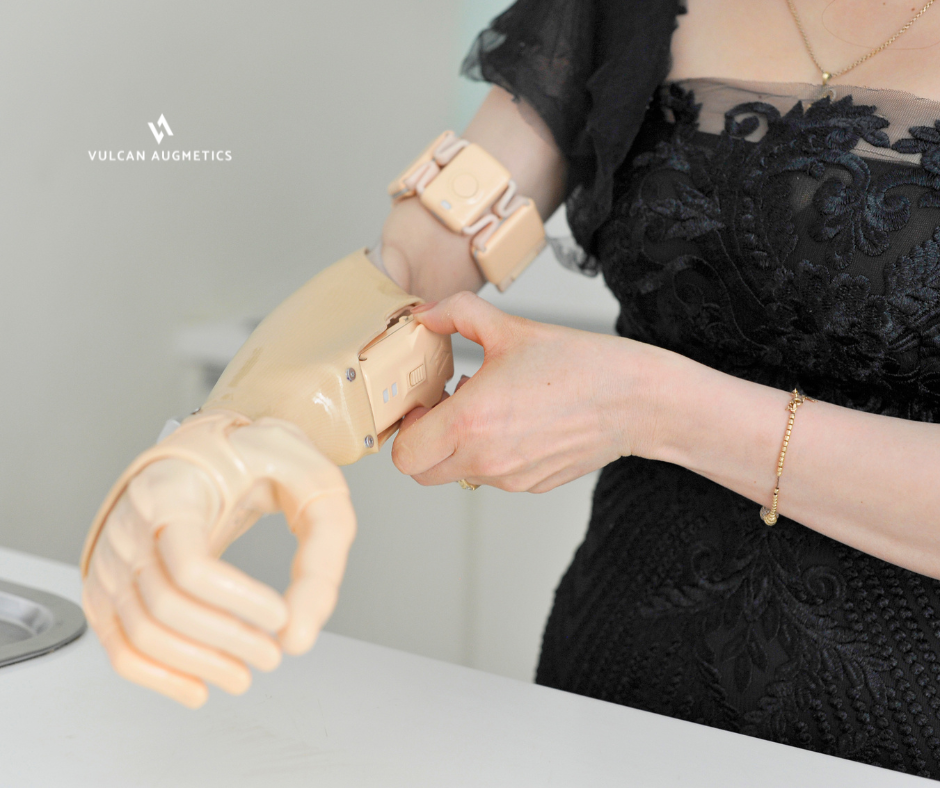
A female arm amputee is wearing a fair skin Vulcan prosthetic hand to hold a cleanser

Will It Be Painful To Fit Your Vulcan Prosthetic Hand?

Thinking about getting a new prosthetic hand but worried the process might be painful?  We understand your concern, that’s why, at Vulcan Augmetics, we’ve designed the entire experience to be fast, supportive, and most importantly, comfortable. Here’s what you can expect when you’re fitted for your new Vulcan Multi-grip Myoelectric Hand: A Quick and Comfortable Process – in Just 3 Simple Steps 1. MeasurementIt all begins with precise measurements of your residual limb. Our trained team uses this information to create a custom socket that fits your body securely and comfortably. 2. Test and AdjustOnce your socket is ready, you’ll try it on. Our team will carefully adjust it to ensure it feels snug but not tight, and that it doesn’t cause pressure or discomfort.  We know that comfort plays a major role in your long-term experience, particularly for users who rely on their prosthetic for more than four hours a day for work and daily routines. 3. Quick Installation and Automatic Calibration Unlike traditional prosthetic systems that require long setup times and manual signal mapping, Vulcan’s unique app-driven calibration system speeds everything up.  Using the Vulcan app, the Vulcan Myoband sensor ring can automatically detect and align to your muscle signals in minutes – no guesswork, no trial-and-error, and NO SURGERY.  This allows for a smoother, faster transition without the discomfort sometimes associated with older calibration methods. Personalized Training That Works for You To help you get comfortable with your new hand, you’ll have full access to short, personalized training sessions – usually starting at just 20 minutes each – via the Vulcan app’s built-in rehab program, which includes 10 easy-to-follow lessons to guide you through controlling your new hand at your own pace. The app also lets you track your progress, explore training exercises, and get helpful support with Chatbox to improve your confidence and comfort. It’s like having a personal trainer for your prosthetic, right in your pocket. So, Is The Process Painful? Not at all. Every part of the Vulcan fitting process is designed to minimize discomfort. From the custom-fit socket to quick calibration and manageable training sessions, we’ve taken every step to make sure the experience is as easy on your residual limb as possible. Have questions or ready to begin your journey with Vulcan? Fill out the contact form

Will It Be Painful To Fit Your Vulcan Prosthetic Hand? Read More »

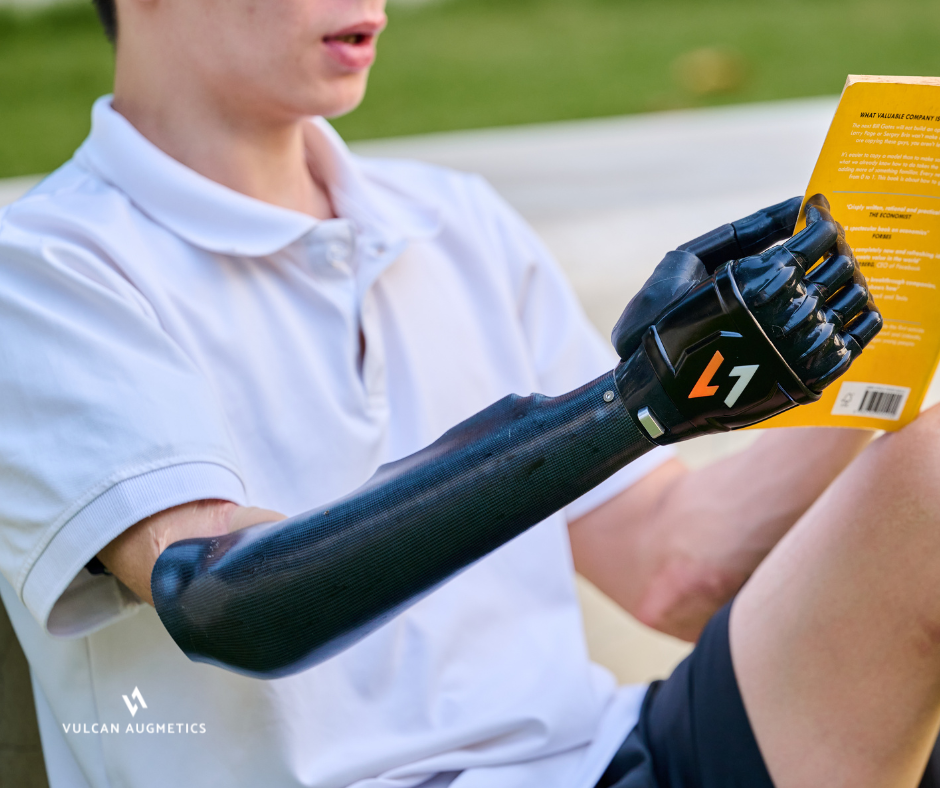
A young male arm amputee wears a black Vulcan prosthetic hand to hold a book

Vulcan Hand’s 03 Color Options: Match Your Personal Style

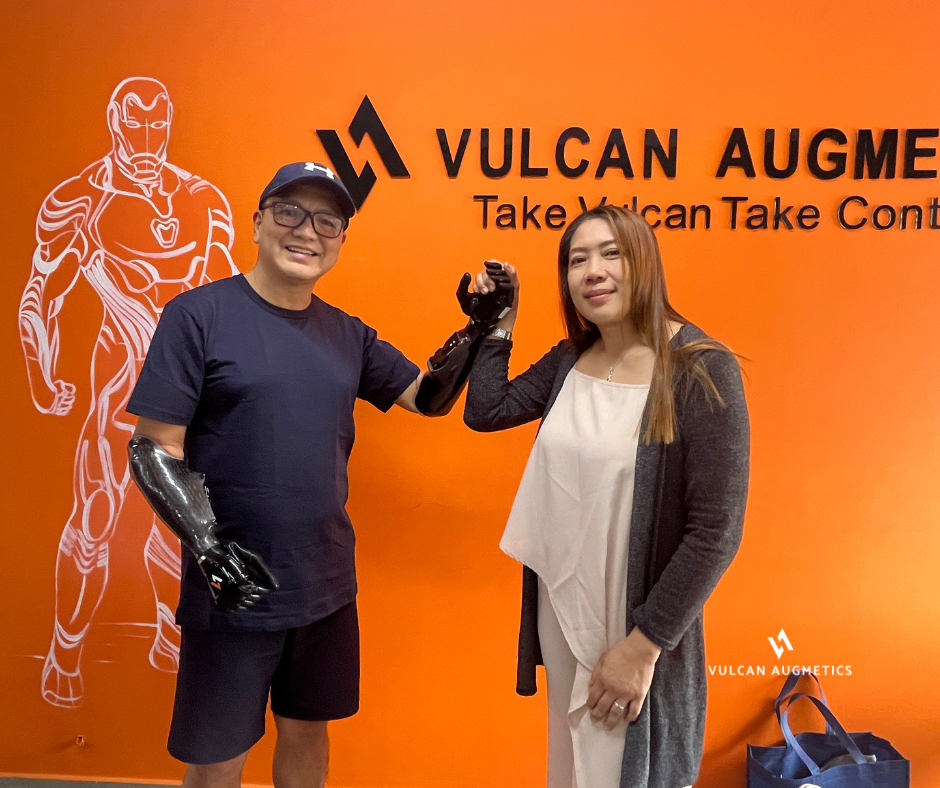
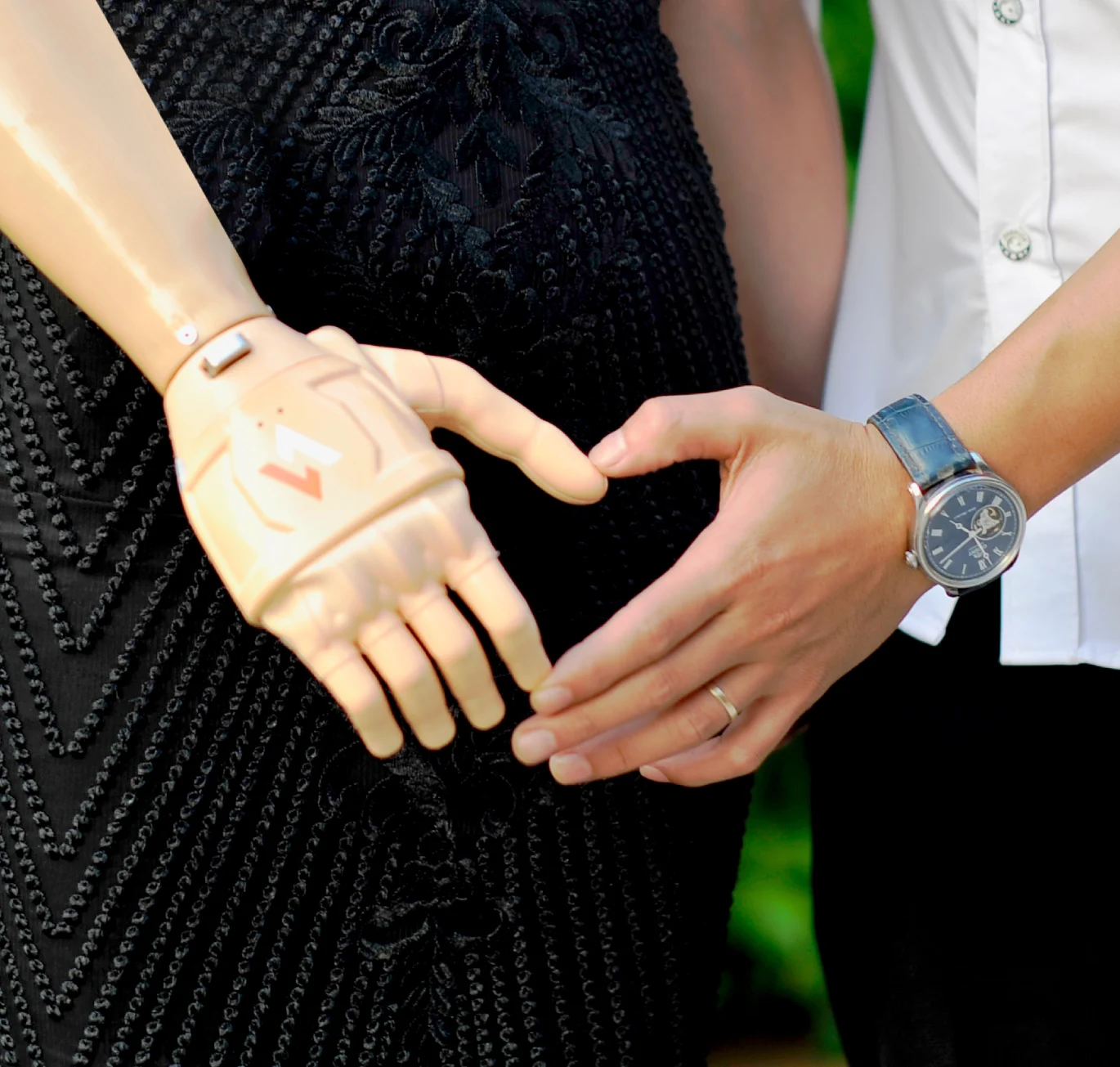
More than just a prosthetic hand, Vulcan loves to give our users a hand to express their emotion and style with 03 color options, allowing them to be comfortable with the new look while enjoying the benefits of advanced myoelectric technology. 03 Prosthetic Hand Color Options Original Black The Original Black option offers a sleek and modern look that fits any occasion.  Its timeless design makes it suitable for both casual and formal settings, from business attire to everyday wear, making it a go-to choice for many male users at Vulcan. Fair Skin Our Fair Skin option is specifically designed to match lighter skin tones, providing a natural appearance.  This color enhances comfort in social settings, allowing users to feel more at ease in their interactions. This is why it is the top-selling option for Vulcan ladies. Tanned Skin The Tanned Skin color offers a realistic option for those with medium to darker complexions.  When your prosthetic hand looks more like your own skin, it can significantly boost your confidence, helping you feel more connected to your body. How Vulcan Supports Personalization Vulcan is committed to supporting personalization through various customization options available. One more interesting option is that you can definitely redesign the outlook of your prosthetic hand by easily using a decal to decorate it in your exclusive and favorite way, like the Iron Man hand of one of our users above. Choose Your Personal Look At Vulcan, everyone deserves to feel confident and authentic in their appearance. Explore the Vulcan 03’s color options that suit you the most by talking with us here.

Vulcan Hand’s 03 Color Options: Match Your Personal Style Read More »

An arm amputee man wearing two black Vulcan prosthetic hands on his both stumps hold his wife's hands in an orange room

Prosthetic Hand Tips To Save Up To USD 100,000

According to WHO and the World Bank, it is estimated that while there are 35–40 million people currently requiring prosthetic hands but only 1 in 10 persons has access to such services. In the complexity of the world’s current situation, discover how Vulcan is on its progress to lift this number in the coming years for the upper limb amputees in different regions.  The Cost of Prosthesis Around the World The costs of prosthetic arms can vary widely across the globe, creating significant challenges for many individuals and families. In some regions, like the US and Europe, the price for a basic prosthetic can reach USD 10,000. Advanced bionic hands equipped with the latest technology can soar from USD 50,000 to USD 100,000 for the first use. Not to mention the need for maintenance or change after years. Unfortunately, in most cases, this financial burden can be overwhelming. It leaves many people without access to the devices they need to enhance their mobility and daily functioning.  Affordable and Accessible Prosthetic Hand for Everyone At Vulcan, we firmly believe that everyone should have access to high-quality prosthetics, regardless of their financial situation.  People often say that affordable prosthetic hands come with limited functions while the more advanced the prosthetic hand is, the more expensive it costs. The thing is Vulcan affordable options do not ask users to choose between pricing and multiple functions.   Unlike traditional prosthetics, which can be prohibitively expensive and may not offer the latest advancements… The Vulcan myoelectric hands can cover 40+ daily activities with just ⅓ the cost of the most modern bionic hands.  We also offer various combo options, allowing users to customize their prosthetic experience without overspending. Since 2023, the Vulcan control solutions have been exported to 11 countries with over 20 official clinics across Asia, Europe, South America, and the Middle East. We make it easier for arm amputees in different regions to receive Vulcan assistance without a distance barrier.  Once you have been a part of the Vulcan community, remember to check the Vulcan app for direct support. To know if the Vulcan hand is already available in your country, check out here. If your country is not on the list, just fill out this form and we will assist you to the nearest partnered clinic in your area. 

Prosthetic Hand Tips To Save Up To USD 100,000 Read More »

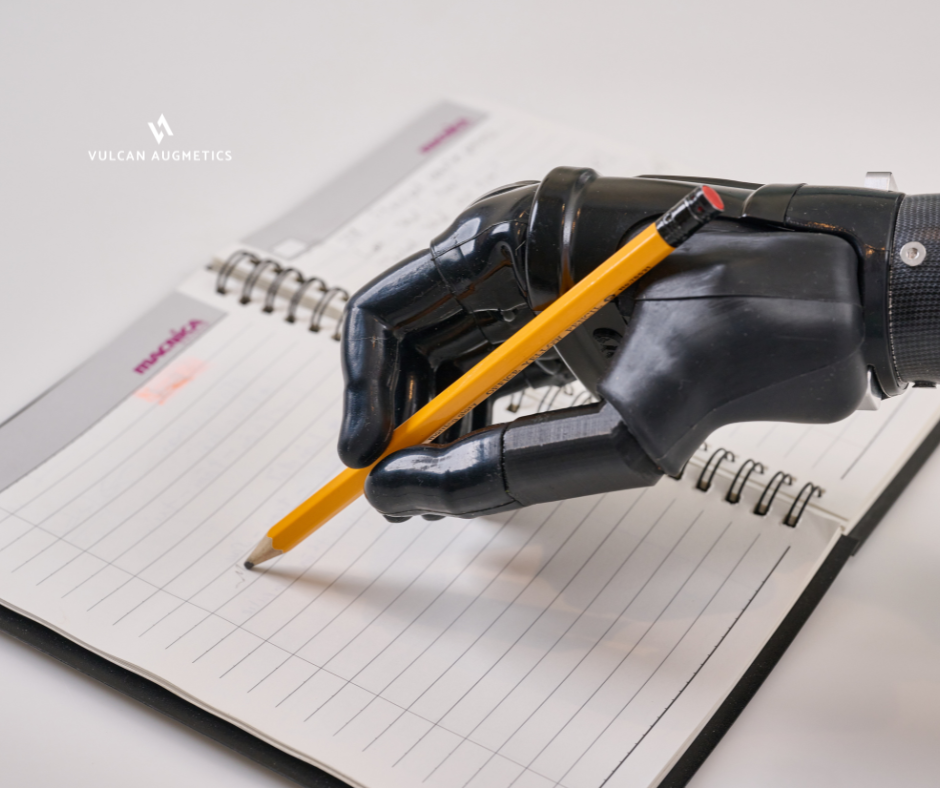
A young male arm amputee wears a black Vulcan prosthetic hand to hold a pencil and write note on a notebook

How This Prosthetic Hand Can Perform Bionic Level With Just ⅓ Price!


While this fact may sound hard to believe (or not)… You can use the Vulcan myoelectric prosthetic hand to write a poem, which requires fine motor skills, like any bionic hand. So how can a myoelectric hand be able to operate at a bionic level, and in what ways does it improve users’ lives with fine motor skills? Discover in this blog! Different Technology For Different Functions While myoelectric technology focuses on muscle signals for control and performing activities through simple openness and closeness of the prosthetic hand, bionic technology encompasses a broader range of advanced functionalities, in which the fingers can be moved independently.  As a result, the cost of bionic hands is much higher, up to USD 100,000.  How Vulcan Prosthetic Hand Can Perform Some Tasks At The Bionic Level The magic of the Vulcan hand lies in its unique designs. Flexibility in Grasping One of the unique features of the Vulcan hand is its three adjustable thumb lock positions.  These positions allow users to change how the thumb is locked in place, creating different grips for various tasks. Instead of being able to just open and close like any other traditional myoelectric hand. Depending on the thumb position, the Vulcan hand can grasp objects of different shapes and sizes. From gripping a bike’s handling bar, holding a pen, or picking up small items like coins, enhancing its usability. Simple in Use Despite the ability to adapt to complex tasks, the Vulcan hand makes it easy for any user to use it whenever he wants to change the grips.  No required complex controlling rules to control group grips, users can simply adjust the thumb lock position manually.  It can be customized to fit the specific requirements of each user, ensuring comfort and functionality.  Whether it’s writing, typing, or buttoning clothes, the Vulcan hand allows users to engage in detailed tasks that require precision and fine motor skills to perform some bionic-level tasks. With the ability to restore up to 60% physical abilities of the biological hand; the Vulcan prosthetic hand can also boost confidence and self-esteem.  For more information and support, please fill in the form here for a deeper 1-1 consultation.

How This Prosthetic Hand Can Perform Bionic Level With Just ⅓ Price! Read More »

A young female arm amputee wears a fair skin Vulcan prosthetic hand in a kitchen

Does the Vulcan hand use brain-controlling waves to operate?

When discussing control methods for prosthetics, it’s essential to differentiate between brain waves and muscle signals.  Brain waves are electrical impulses from the brain that can indicate thoughts or intentions to control the prosthetic hand. However, the Vulcan myoelectric hand does not use these waves for control.  In this blog, we will clarify how the Vulcan hand works, focusing on its simple control methods for every user to use. Why Does the Vulcan Hand Not Use Brain-Controlling Waves? Instead of relying on brain waves, the Vulcan hand uses muscle signals.  When a user thinks about moving their arm, the muscles from the bicep of their residual limb contract. These contractions create electrical signals that the Vulcan Myoband (the controlling sensor) can detect. Later on, Myoband will interpret these signals into a closing or opening statement to the Vulcan hand.  This method is more straightforward for users, making it easier to control the prosthetic. Importance of Muscle Signals in Making Control Intuitive and Effective Difficulty in use is one of the common reasons contributing to prosthetic abandonment for arm amputees according to Engdahl, 2015. This can lead to passive use of the device or total rejection, even just a few weeks after installing the prosthetic.  That is why a simple controlling method that can be learned and used quickly by most arm amputees is what Vulcan heads to from the beginning In the hope of minimizing the prosthetic abandonment for users. As Vulcan’s users become familiar with how their muscles respond, they can learn to control the prosthetic hand effectively in the shortest time (maximum of 30 minutes to learn on their fitting days).  This connection between thought and action makes it simpler for users to perform everyday tasks. Also, this approach of Vulcan makes it easy for users of all ages to operate, keeps costs reasonable, and does not require any plasty operation while still performing over 30 activities at a precision level.  All are done while being compact, easy to wear, and detachable for users of most ages, supporting them in regaining independence in their daily activities.  If you are interested in experiencing the Vulcan prosthetic arm or have any questions, please don’t hesitate to contact us by registering for this form. Our team is here to support you in less than 48 hours.

Does the Vulcan hand use brain-controlling waves to operate? Read More »

No TMR Surgery Needed To Wear This Unique Prosthetic Hand

What is TMR Operations? Stump arrangement surgery, often known as Targeted Muscle Reinnervation (TMR), is a surgical procedure designed to improve the control and functionality of prosthetic hands for individuals who have undergone limb amputation.  The technique involves rerouting nerves that once controlled the amputated limb to the remaining muscles in the area, ensuring a better fit for a prosthetic arm.  While this can create a more stable base for certain prosthetics, it also poses several challenges.  How the Vulcan Prosthetic Hand Works Without Any TMR Required However, upper limb amputees do not need to experience these additional operations once they wear the Vulcan Prosthetic Hand. How can we make that difference?  Vulcan Myoband – Solution For No Surgery, No Pain One of our standout features is the Vulcan Myoband – the controller worn on the bicep of users.  With its highly sensitive ability, the Vulcan Myoband can detect muscle signals from the remaining part of the arm. Then adjust it to the suitable movements to control the prosthetic hand without any surgical intervention. Plus, the Myoband can be fitted to more than 90% of types of stump conditions, regardless of causes of amputation, age, nerve affected, scars amount, etc. Therefore, opening more opportunities to a wide range of upper limb amputees in the world.  Advantages of Using the Vulcan Hand Overall, this non-invasive approach means that users can start using the Vulcan hand as soon as possible and offering the following benefits: By eliminating the need for surgical stump arrangements, the Vulcan hand not only reduces physical risks but also addresses emotional concerns. From now on, you can explore the non-surgical options available with the Vulcan hand. For more information and support, you can always contact us by filling out this form and the Vulcan team will assist you in 24 hours. 

No TMR Surgery Needed To Wear This Unique Prosthetic Hand Read More »